


Table of Contents
- What Is Shared Housing Under Dubai Law No. 4 of 2026?
- Does Shared Housing in Dubai Now Require a Permit?
- Can a Tenant Sublet Rooms or Bed Spaces Under the New Law?
- What Rights Do Residents Have in Legal Shared Housing?
- What Duties Apply to Shared Housing Residents?
- What Must Landlords and Shared Housing Operators Do?
- Are Social Media and Online Room Advertisements Still Allowed?
- What Is the Compliance Period for Existing Shared Housing?
- What Are the Penalties for Breaking the Shared Housing Rules?
- Can Shared Housing Units Be Inspected?
- Where Are Shared Housing Disputes Filed?
- What Should Tenants, Landlords and Operators Check Now?
- FAQs on Dubai Shared Housing Law 2026
- Check the Legal Status of the Shared Housing Arrangement
Dubai has introduced a dedicated legal framework for shared accommodation under Law No. 4 of 2026 on the Regulation of the Occupancy and Management of Shared Housing. The law affects property owners, residents and companies involved in renting or managing rooms, shared apartments and other qualifying shared residential spaces across Dubai.
The biggest change is that shared housing is now a regulated, permit-based activity. A property cannot simply be divided into rooms or spaces and rented to multiple residents outside the prescribed framework. The law also restricts subletting by occupants, introduces an official shared housing register, sets duties for landlords and residents, and gives the Rental Disputes Centre jurisdiction over disputes arising under the new regime.
If a disagreement has already developed over room subletting, rent, eviction or the right to remain in a property, the issue may require review under Dubai’s property rental dispute rules and procedures.
What Is Shared Housing Under Dubai Law No. 4 of 2026?
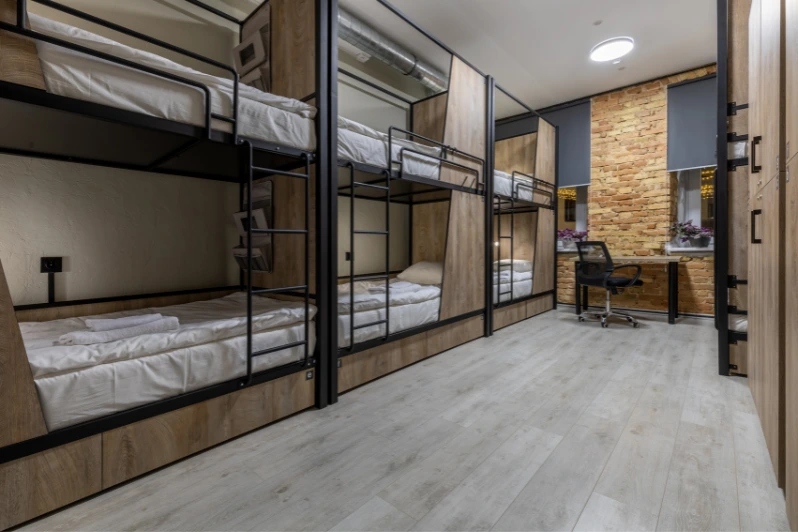
The law defines shared housing as an arrangement where a group of individuals or families are each allocated a space within a property for residential use while sharing facilities such as the kitchen, dining room, bathroom or external common areas.
The framework applies throughout Dubai, including private development areas and free zones. It covers qualifying apartments, detached houses, residential complexes, mixed-use buildings, townhouses and multi-storey buildings.
It does not apply to units designated as collective labour accommodation, which remain subject to a separate regulatory framework.
The recognised shared-housing categories include families, individual women, individual men, students and employees housed by government entities, companies or private institutions, subject to the detailed standards prescribed for the relevant property.
Need Legal Help?
Dubai's Expert Advice at Your Fingertips.

Does Shared Housing in Dubai Now Require a Permit?
Yes. Law No. 4 of 2026 prohibits a person or company from designating a property as shared housing without the required permit.
Dubai Municipality is the principal authority responsible for regulating shared housing. It is empowered to determine which areas may be used for shared accommodation, the maximum number of residents allowed in a unit, the space to be allocated to each resident and the facilities that must be available.
The standard permit is valid for one year and may be renewed. At the owner’s request, the competent authority may issue a two-year permit. A renewal application must be submitted at least 30 days before the permit expires.
The law itself does not establish one universal occupancy number or a fixed permit fee for every property. Those details are to be determined through implementing decisions and the applicable technical requirements. Owners should therefore avoid relying on informal online claims about a fixed number of people permitted per bedroom.
Can a Tenant Sublet Rooms or Bed Spaces Under the New Law?
No. This is one of the clearest changes under the Dubai Shared Housing Law 2026.
Only the property owner or an authorised establishment may rent qualifying shared accommodation. An authorised establishment may manage and rent the property for the owner or may lease the property from the owner for the purpose of renting approved spaces to residents.
A resident cannot sublet the space allocated to them or rent part of it to someone else. The law expressly treats a sublease made by the occupant in those circumstances as invalid.
This means a tenant who rents an entire apartment and independently advertises bedrooms, partitions or bed spaces to other people cannot rely simply on informal agreements, WhatsApp messages or rent receipts to make the arrangement compliant with the new shared-housing regime.
Landlords dealing with an existing unauthorised arrangement can also review the separate legal issues concerning landlord remedies for unauthorised subletting in Dubai.
What Rights Do Residents Have in Legal Shared Housing?
The new law does more than impose restrictions. It also formalises the relationship between the person providing the accommodation and the resident.
The landlord must enter into a tenancy agreement with the resident, register that agreement in the Shared Housing Register and provide the resident with a copy.
Unless the contract states otherwise, rent is payable monthly in advance. The statutory definition of rent also includes the use of common facilities and services. Electricity and water charges are included in the rent by default unless the parties agree otherwise, with the landlord responsible for payment to the service provider.
The law also gives residents a route to terminate a shared-housing tenancy during its term. The applicable notice is generally at least 30 days, or a longer period where the tenancy agreement requires it. Where the statutory conditions for termination are met, the resident can claim the unused advance rent subject to the deduction provided by the law.
A change in ownership of the property does not automatically terminate the resident’s existing tenancy agreement.
What Duties Apply to Shared Housing Residents?
Residents also have direct obligations under the new framework.
They must comply with health, environmental and public-safety requirements, take reasonable care of the property and use their allocated space only for residential purposes.
A resident must not:
- sublet the allocated space;
- allow another person to occupy or use that space contrary to the permitted arrangement;
- operate a business or other economic activity from the shared unit; or
- make unauthorised alterations, repairs or structural changes to the property.
Residents must also allow the landlord access where necessary to verify continuing compliance with the shared-housing conditions.
What Must Landlords and Shared Housing Operators Do?
The compliance burden falls particularly heavily on owners and licensed operators.
Among other obligations, the landlord must respect the permitted occupancy limit, maintain the required registration information and enter each qualifying resident’s tenancy agreement in the official register.
The property must also meet the applicable planning, construction, health, fire-safety, sanitation, environmental, security and electrical-safety standards.
A visible sign must identify the permit holder and the category of shared housing in Arabic and English.
Operators also require the appropriate activity authorisation. An owner cannot simply appoint an unlicensed individual to run a room-rental or bed-space business on their behalf.
Where an owner, management company or investor faces a wider contractual or regulatory dispute concerning the property, the matter may also require review as a real estate dispute in Dubai.
Are Social Media and Online Room Advertisements Still Allowed?
Advertising shared accommodation is regulated as well.
Printed and digital advertisements for permitted shared housing must contain the approved commercial name of the establishment and the relevant permit number.
Owners and operators must not advertise accommodation in a misleading way or promote a property for a use that differs from its permitted shared-housing purpose.
Anyone considering a room found through a social-media group or classified advertisement should therefore check who is actually offering the accommodation and whether that person or company is legally entitled to rent the space.
What Is the Compliance Period for Existing Shared Housing?
The law gives existing owners and establishments that were already operating shared housing before the new regime took effect a one-year period to bring their properties and operations into compliance. Dubai Municipality may grant a one-time extension where appropriate.
Dubai Municipality has publicly confirmed 26 August 2026 as the operational effective date, which places the current one-year adjustment period to 26 August 2027 unless an authorised extension applies.
The transition period should not be treated as permission to ignore separate building, fire-safety, overcrowding or land-use requirements that may already apply to a property.
What Are the Penalties for Breaking the Shared Housing Rules?
Violations of Law No. 4 of 2026 or implementing decisions can attract fines ranging from AED 500 to AED 500,000.
If the same violation is repeated within one year, the fine may be doubled, subject to a maximum of AED 1 million.
The law does not mean every breach automatically attracts the maximum fine. The specific violations and their corresponding penalties are determined through the applicable decisions issued under the legislation.
Additional administrative measures can include suspension of an operator’s activity, cancellation of a permit, action concerning the commercial licence, disconnection of public services until a violation is corrected and evacuation of a non-compliant property in accordance with the statutory procedure.
Can Shared Housing Units Be Inspected?
Yes. The competent authorities have inspection and monitoring powers under the law.
Inspections may be used to verify occupancy levels, safety standards, permit conditions and compliance by owners, operators and residents. The owner, establishment and resident must allow authorised inspectors access where they are carrying out their statutory duties.
This makes informal partitioning particularly risky where alterations affect escape routes, fire protection, electricity, ventilation or another building-safety requirement.
Where Are Shared Housing Disputes Filed?
Law No. 4 of 2026 gives Dubai’s Rental Disputes Centre exclusive jurisdiction over disputes concerning the rights and obligations created by the shared-housing law and its implementing decisions.
A dispute may concern issues such as rent, termination, subletting, repayment of advance rent, eviction, management arrangements or compliance with a registered shared-housing tenancy.
The correct documents and legal route will depend on the dispute. For an overview of the filing process, see how to file a rental dispute in Dubai.
What Should Tenants, Landlords and Operators Check Now?
Tenants should confirm who is legally renting the space to them, whether the unit is being operated under the shared-housing framework and whether they will receive a registered tenancy agreement rather than relying only on an informal payment arrangement.
Landlords should identify any properties currently being rented by room, partition or allocated space and check whether the arrangement falls within Law No. 4 of 2026. Existing management and master-lease agreements should also be reviewed where a third party is operating the property.
Operators should check licensing, permit, advertising, contract-registration and occupancy requirements before continuing or expanding a shared-accommodation business.
FAQs on Dubai Shared Housing Law 2026
Q1. Is bed-space or room sharing illegal in Dubai?
Not automatically. Shared housing is permitted under Dubai Law No. 4 of 2026 where the property, landlord or operator complies with the applicable permit, occupancy, registration and safety requirements. Unauthorised subletting or non-compliant partitions may still breach the law.
Q2. Can a tenant sublet rooms or bed spaces in Dubai?
No. Under the new shared housing framework, a resident cannot sublet the space allocated to them or allow another person to occupy it outside the permitted arrangement. Shared accommodation must be rented through the property owner or an authorised establishment.
Q3. Does shared housing in Dubai require a permit?
Yes. A property cannot be designated or operated as shared housing without the required permit. The applicable occupancy, property and safety conditions must also be satisfied.
Q4. Should a tenant receive a contract for a room in shared housing?
Yes. The landlord must enter into a tenancy agreement with the resident, register it in the Shared Housing Register and provide the resident with a copy.
Q5. Are electricity and water included in shared housing rent?
They are included in the rent by default unless the tenancy agreement states otherwise. The landlord remains responsible for paying the relevant service provider.
Q6. What are the fines for violating Dubai shared housing rules?
Violations can attract fines ranging from AED 500 to AED 500,000. A repeated violation within one year may result in a doubled fine, subject to a maximum of AED 1 million.
Q7. Can shared housing properties be inspected?
Yes. Competent authorities may inspect shared housing properties to check occupancy limits, permit conditions, safety standards and compliance with the law.
Q8. What happens if a shared housing permit is cancelled?
Permit cancellation does not necessarily require residents to leave immediately. The competent authority may allow occupants a reasonable period to move to alternative accommodation.
Q9. Where are shared housing disputes filed in Dubai?
The Dubai Rental Disputes Centre has exclusive jurisdiction over disputes involving rights and obligations arising under Dubai Law No. 4 of 2026 and its implementing decisions.
Need Legal Help?
Dubai's Expert Advice at Your Fingertips.
Check the Legal Status of the Shared Housing Arrangement
Dubai’s 2026 law does not simply ban shared accommodation. It replaces informal room and bed-space arrangements with a regulated system based on approved properties, authorised landlords or operators, registered contracts and enforceable resident rights.
For landlords and tenants, the important question is now whether the actual arrangement complies with the new framework. Where there is already a dispute about subletting, rent, eviction, registration or the right to occupy a shared unit, legal review of the rental dispute can help identify the correct position before further action is taken.
